
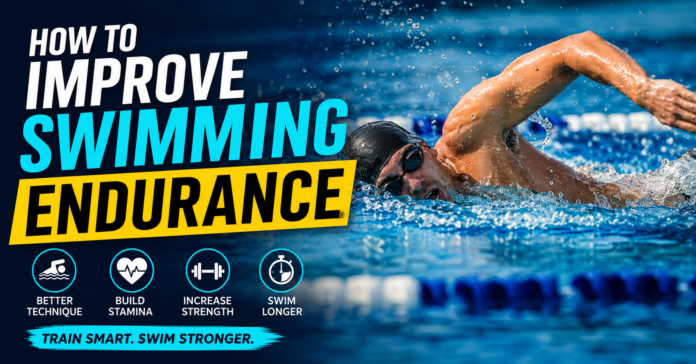
Want to swim longer without feeling exhausted? Improving swimming endurance requires a combination of proper technique, structured training, strength building, and recovery. By focusing on efficiency in the water and gradually increasing your swimming workload, you can significantly boost your stamina and performance.
Key Takeaways
- Improve swimming technique to conserve energy.
- Increase training distance gradually.
- Practice interval workouts regularly.
- Focus on breathing control.
- Build strength through dryland exercises.
- Prioritize nutrition, hydration, and recovery.
- Track progress and stay consistent.
Why Swimming Endurance Matters
Swimming endurance is your ability to maintain performance over an extended period without excessive fatigue. Whether you’re training for a competition, triathlon, fitness goals, or simply want to enjoy longer swimming sessions, endurance is the foundation of success.
Better endurance helps you:
- Swim longer distances comfortably
- Improve overall cardiovascular fitness
- Burn more calories
- Increase speed over time
- Reduce fatigue during workouts
Understanding the Factors That Affect Swimming Endurance
Before improving endurance, it’s important to understand what influences it.
Key Factors Include:
| Factor | Impact on Endurance |
|---|---|
| Swimming Technique | Reduces energy waste |
| Cardiovascular Fitness | Improves oxygen delivery |
| Breathing Efficiency | Helps maintain stamina |
| Muscle Strength | Supports longer performance |
| Recovery | Prevents burnout and fatigue |
When these elements work together, endurance improves significantly.
Master Your Swimming Technique
Many swimmers try to build endurance by simply swimming more laps. However, poor technique wastes energy and limits progress.
Focus on These Areas:
Body Position
Keep your body horizontal and streamlined in the water to reduce drag.
Efficient Kicking
Avoid excessive kicking. Use controlled, consistent kicks that support propulsion without exhausting your legs.
Smooth Arm Movements
Long, efficient strokes help you travel farther with less effort.
Pro Tip: Count your strokes per lap. Fewer efficient strokes often indicate better technique and improved energy conservation.
Increase Your Distance Gradually
One of the most effective ways to improve swimming endurance is progressive overload.
Example Weekly Progression
| Week | Total Distance Goal |
|---|---|
| Week 1 | 1,000 meters |
| Week 2 | 1,200 meters |
| Week 3 | 1,400 meters |
| Week 4 | 1,600 meters |
Increasing distance by 10–15% per week allows your body to adapt safely.
A common mistake is increasing volume too quickly, which can lead to fatigue or injury.
Use Interval Training
Interval training develops both aerobic and anaerobic endurance.
Sample Endurance Workout
- Warm-up: 200m easy swim
- 8 × 100m moderate pace
- 20-second rest between sets
- 200m recovery swim
- Cool-down: 100m easy swim
This type of training teaches your body to recover faster while maintaining performance.
Expert Insight: Many competitive swimmers spend a large portion of their training time performing structured intervals rather than continuous swimming.
Improve Breathing Efficiency
Breathing plays a major role in swimming endurance.
Tips for Better Breathing
- Exhale fully underwater.
- Avoid holding your breath.
- Practice bilateral breathing when appropriate.
- Maintain a relaxed breathing rhythm.
When breathing becomes more efficient, your muscles receive more oxygen and fatigue is delayed.
Simple Breathing Drill
Swim freestyle while focusing on slow, controlled exhalation underwater and quick inhalation during rotation.
Practicing this regularly can improve comfort and stamina.
Build Strength Outside the Pool
Swimming endurance isn’t built only in the water.
Best Dryland Exercises
- Planks
- Push-ups
- Pull-ups
- Squats
- Lunges
- Resistance band exercises
Strength training improves muscular endurance and helps maintain proper form during long swims.
Core Training Is Essential
A strong core stabilizes your body and reduces unnecessary movement, making every stroke more efficient.
Train at Different Intensities
Many swimmers make the mistake of swimming at the same pace every session.
Instead, mix your workouts:
Easy Sessions
Improve aerobic capacity and recovery.
Moderate Sessions
Build sustainable endurance.
High-Intensity Sessions
Increase cardiovascular fitness and speed.
This variety prevents plateaus and keeps training effective.
Pro Tip: Follow the 80/20 rule. Spend about 80% of training at an easy-to-moderate intensity and 20% at higher intensity.
Prioritize Nutrition and Hydration
Your body needs fuel to perform well.
Before Swimming
Choose foods rich in carbohydrates such as:
- Oatmeal
- Bananas
- Whole-grain toast
- Fruit smoothies
After Swimming
Focus on recovery with:
- Lean protein
- Healthy carbohydrates
- Plenty of water
Even mild dehydration can negatively impact endurance and performance.
Recover Like an Athlete
Recovery is where endurance gains actually happen.
Recovery Essentials
- Sleep 7–9 hours nightly
- Stretch after workouts
- Take rest days when needed
- Avoid overtraining
A well-rested swimmer performs better and progresses faster.
Common Mistakes That Limit Swimming Endurance
Avoid these common errors:
- Swimming every workout at maximum effort
- Ignoring technique improvements
- Increasing distance too quickly
- Poor breathing habits
- Inadequate recovery
- Skipping strength training
Correcting these mistakes often produces noticeable improvements within weeks.
Frequently Asked Questions
1. How long does it take to improve swimming endurance?
Most swimmers notice measurable improvements within 4–8 weeks of consistent training and proper recovery.
2. Is it better to swim longer or faster for endurance?
A combination of longer swims and interval training provides the best results for building endurance.
3. How many times per week should I swim?
For most people, swimming 3–5 times per week is ideal for improving endurance.
4. Does strength training help swimming endurance?
Yes. Strength training improves muscular endurance, stroke efficiency, and overall swimming performance.
5. What is the best stroke for building endurance?
Freestyle is generally the most efficient stroke for endurance training because it allows sustained effort over long distances.
Take Your Swimming Endurance to the Next Level
Improving swimming endurance is not about pushing harder every day—it’s about training smarter. Focus on efficient technique, structured workouts, breathing control, strength training, and proper recovery. Stay consistent, track your progress, and gradually challenge yourself. With the right approach, you’ll be able to swim longer, feel stronger, and enjoy every session in the water with greater confidence and stamina.