
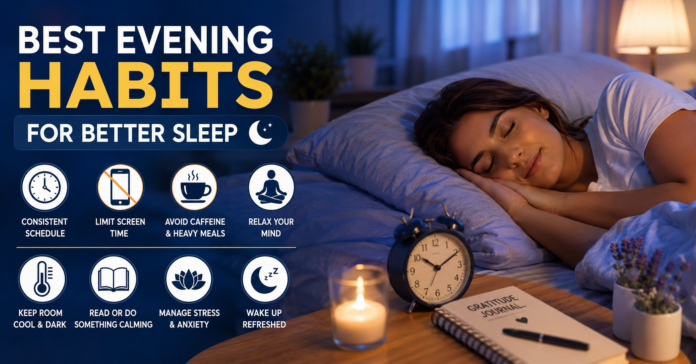
Good sleep starts long before your head touches the pillow. The best evening habits for better sleep help your body and mind transition from a busy day into a restful night. By creating a consistent nighttime routine, reducing stimulation, and supporting your natural sleep cycle, you can fall asleep faster and wake up feeling refreshed.
Key Takeaways
- Maintain a consistent sleep schedule every day.
- Limit screen time at least 60 minutes before bed.
- Avoid caffeine and heavy meals in the evening.
- Create a relaxing bedtime routine.
- Keep your bedroom cool, dark, and quiet.
- Practice stress-reducing activities like reading or meditation.
- Get quality sleep by supporting your body’s natural circadian rhythm.
Why Evening Habits Matter for Sleep Quality
Many people focus on what they do during the day to improve sleep, but evening routines are equally important. Your body follows a natural internal clock known as the circadian rhythm, which controls sleep and wake cycles.
Poor evening habits such as excessive screen use, late-night snacking, or irregular bedtimes can disrupt this rhythm and make it harder to sleep well.
Expert Tip: Consistency is often more important than perfection. A simple routine followed every night can significantly improve sleep quality over time.
Stick to a Consistent Sleep Schedule
One of the best evening habits for better sleep is going to bed at the same time every night.
Benefits of a Regular Sleep Schedule
| Habit | Benefit |
|---|---|
| Fixed bedtime | Helps regulate circadian rhythm |
| Fixed wake-up time | Improves sleep quality |
| Consistent routine | Reduces sleep disruptions |
Aim to maintain your schedule even on weekends whenever possible.
Reduce Screen Time Before Bed
Phones, tablets, televisions, and laptops emit blue light that can interfere with melatonin production, the hormone responsible for sleep.
Better Alternatives
- Read a physical book
- Listen to calming music
- Practice light stretching
- Journal your thoughts
Pro Tip: Stop using electronic devices at least one hour before bedtime for better sleep results.
Avoid Heavy Meals Late at Night
Eating large meals shortly before bed can cause discomfort, indigestion, and interrupted sleep.
Foods to Limit in the Evening
| Food Type | Why Avoid It |
|---|---|
| Spicy foods | May cause acid reflux |
| Fried foods | Difficult to digest |
| Sugary snacks | Can increase energy levels |
| Heavy meals | May disrupt sleep |
Instead, choose light snacks such as:
- Bananas
- Yogurt
- Almonds
- Warm milk
These options can help promote relaxation before bedtime.
Create a Relaxing Wind-Down Routine
Your brain needs signals that bedtime is approaching.
A calming routine can include:
- Taking a warm shower
- Reading for 15–20 minutes
- Gentle stretching
- Deep breathing exercises
- Meditation
When practiced consistently, these activities help your body prepare for sleep naturally.
Expert Insight: Many sleep specialists recommend performing the same calming activities in the same order each night to strengthen sleep cues.
Keep Your Bedroom Sleep-Friendly
Your sleeping environment has a major impact on sleep quality.
Ideal Bedroom Conditions
- Cool temperature (around 18–22°C)
- Minimal noise
- Dark room with blackout curtains
- Comfortable mattress and pillows
- Clean and clutter-free space
A comfortable environment encourages deeper and more restorative sleep.
Manage Evening Stress and Anxiety
Stress is one of the most common reasons people struggle to fall asleep.
Effective Stress-Relief Techniques
- Gratitude journaling
- Meditation
- Breathing exercises
- Listening to calming sounds
- Writing tomorrow’s to-do list
A simple brain-dump exercise can prevent racing thoughts from keeping you awake.
Limit Caffeine and Alcohol in the Evening
Many people underestimate how long caffeine remains active in the body.
Caffeine can affect sleep for several hours after consumption. Consider avoiding:
- Coffee
- Energy drinks
- Strong tea
- Cola beverages
While alcohol may initially make you feel sleepy, it often reduces sleep quality and causes nighttime awakenings.
Try Light Evening Movement
Intense workouts close to bedtime may make it harder to fall asleep for some people.
Instead, choose:
- Gentle yoga
- Evening walks
- Light stretching
- Mobility exercises
These activities help reduce muscle tension and support relaxation.
Practice Gratitude Before Bed
Ending your day with positive reflection can improve mental well-being and sleep quality.
Try writing down:
- Three good things that happened today
- One accomplishment you’re proud of
- Something you’re looking forward to tomorrow
This simple habit can shift your focus away from stress and promote a calmer mindset.
Frequently Asked Questions
1. What is the best evening habit for better sleep?
Maintaining a consistent bedtime schedule is often considered the most effective habit because it helps regulate your body’s natural sleep cycle.
2. How long before bed should I stop using my phone?
Ideally, stop using screens at least 60 minutes before bedtime to reduce blue light exposure and support melatonin production.
3. Can exercise in the evening improve sleep?
Yes. Light activities such as walking, yoga, and stretching can promote relaxation and improve sleep quality.
4. What foods help improve sleep?
Foods like bananas, almonds, yogurt, kiwi, and warm milk may support relaxation and healthy sleep.
5. How many hours of sleep should adults get?
Most adults need between 7 and 9 hours of sleep each night for optimal health and performance.
Building the best evening habits for better sleep doesn’t require dramatic lifestyle changes. Small, consistent actions—such as reducing screen time, creating a calming bedtime routine, managing stress, and maintaining a regular sleep schedule—can have a powerful impact on your sleep quality.
Start by choosing just one or two habits from this guide and practice them every evening. Over time, these simple changes can help you fall asleep faster, sleep more deeply, and wake up energized for the day ahead.