
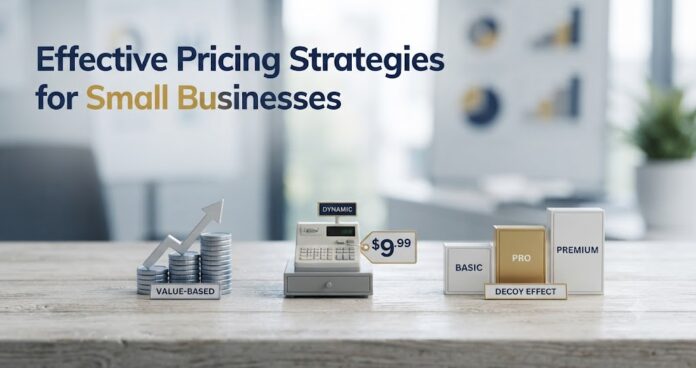
Choosing the right pricing model is the single most significant factor in your business’s profitability and long-term sustainability. By aligning your prices with your target market’s perceived value, operational costs, and competitive landscape, you can maximize revenue while building a loyal customer base.
Key Takeaways
- Pricing isn’t static: You should regularly audit your model based on cost fluctuations and market demand.
- Value-based pricing often yields higher margins than cost-plus pricing.
- Psychology matters: Small adjustments to how prices are presented can lead to significant conversion lifts.
- Testing is mandatory: Use A/B testing to find the “sweet spot” for your unique customer base.
Understanding Your Pricing Foundation
Before setting a number, you must understand your financial floor. Many small businesses fail because they ignore “hidden” costs like overhead, software subscriptions, and the value of their own labor.
Pro Tip: Don’t just calculate the cost of raw materials. Factor in your time and the cost of acquiring a customer (CAC). If your price doesn’t cover these, you aren’t running a business; you’re running a hobby.
Cost-Plus vs. Value-Based Pricing
Most beginners start with Cost-Plus Pricing (Cost + Desired Margin = Price). While simple, this ignores the customer’s perspective.
Value-Based Pricing flips the script: you price based on the problem you solve for the customer. If your service saves a client $5,000, charging $500 feels like a bargain, regardless of how much time it took you.
| Strategy | Best For | Main Advantage |
| Cost-Plus | Commodity products, retail | Simple to calculate |
| Value-Based | Services, consulting, SaaS | Higher profit margins |
| Competitive | Saturated markets | Low barrier to entry |
| Penetration | New market launches | Quick market share gain |
Advanced Psychological Pricing Tactics
Humans don’t process numbers linearly. We make decisions based on context and perception. By applying a few behavioral economics principles, you can influence buying behavior without changing your actual product.
The Power of “Charm Pricing”
Ending prices in .99 or .97 is a classic for a reason. It creates the perception of a “deal.” However, for premium luxury brands, round numbers (e.g., $100 instead of $99) often perform better, as they signal quality and simplicity.
Anchoring and Decoy Effects
When you offer three tiers (e.g., Basic, Pro, Enterprise), the middle tier is usually your target. By making the “Enterprise” tier significantly more expensive, it makes the “Pro” tier look like the obvious, high-value choice.
Expert Insight: When deploying this, always ensure the “decoy” option is clearly inferior to the “pro” option, making the value gap obvious to the consumer.
Dynamic Pricing and Market Sensitivity
In today’s fast-moving market, static pricing can leave money on the table. Dynamic pricing—adjusting your rates based on real-time demand—is no longer just for airlines.
How to Implement Dynamic Changes
- Monitor Seasonality: Increase prices during peak demand and offer tactical discounts during slow periods to keep cash flow steady.
- Competitor Monitoring: [External Link: Use tools like Price2Spy to track industry trends].
- Customer Segmentation: Offer different price points for repeat loyal customers versus one-time visitors.
Troubleshooting Common Pricing Bottlenecks
A common bottleneck is the “fear of increasing prices.” Many small business owners worry about alienating existing customers.
How to handle price hikes:
- Give Notice: Always inform loyal clients 30–60 days in advance.
- Grandfathering: Allow existing customers to keep their old rate for a set period.
- Add Value: Pair a price increase with a new feature, a bonus, or improved service levels.
Building Your Pricing Framework
To effectively set your strategy, follow this step-by-step framework:
- Define Your Persona: Who is your ideal customer? Are they price-sensitive or quality-sensitive?
- Map Competitors: Create a spreadsheet comparing your features vs. their prices. [Internal Link: See our guide on Conducting a Competitive Market Analysis].
- Choose Your Model: Are you selling a subscription (recurring), a one-time product, or a tiered service?
- Test: Launch a pilot price. Monitor conversion rates for at least 30 days before making adjustments.
Frequently Asked Questions
1. Is it better to be the cheapest option in my market?
Rarely. Being the “cheapest” usually attracts high-maintenance, low-loyalty customers. It is almost always better to compete on value, service, or brand story.
2. How often should I review my pricing?
At a minimum, review your pricing strategy every six months. If your costs of goods or labor increase, your prices must follow to maintain your margins.
3. What is the biggest mistake small businesses make with pricing?
The biggest mistake is “underpricing.” Most small businesses start too low, thinking it will help them win clients, but they eventually reach a point where they cannot afford to grow or scale.
4. How do I know if my prices are too high?
If you have high website traffic but very low conversion rates, your pricing might be out of sync with your perceived value.
5. Should I show my prices on my website?
In B2B services, “Call for Pricing” can sometimes be effective, but for most small businesses, transparency builds trust. Displaying clear pricing helps qualify leads before they contact you.
Take Action Today
Pricing is a lever, not a fixed point. Don’t wait for “the perfect time” to optimize your rates. Pick one product or service, perform a quick competitor analysis, and adjust your pricing strategy today to reflect the true value of your hard work.
Ready to streamline your business finances further? Check out our article on [Internal Link: Essential Tools for Small Business Financial Management] to keep your overhead under control.