
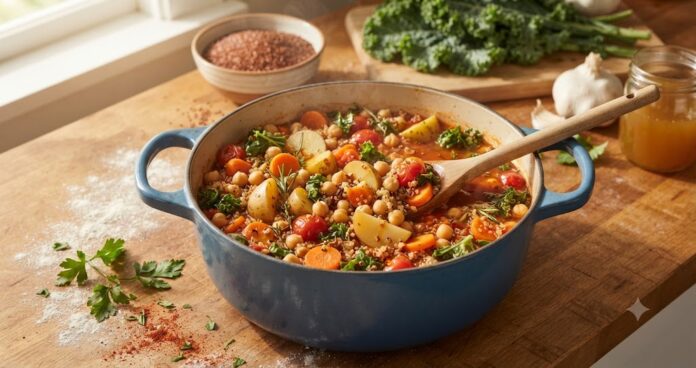
One-pot vegetarian dinner recipes offer the perfect solution for busy weeknights, combining minimal cleanup with maximum flavor. By cooking grains, legumes, and fresh vegetables together in a single vessel, you create complex, cohesive meals while saving significant time in the kitchen.
Why One-Pot Cooking is a Weeknight Game-Changer
Efficiency in the kitchen isn’t just about speed; it’s about reducing cognitive load. When you commit to a one-pot philosophy, you eliminate the mental fatigue of coordinating multiple pans, timing different burners, and managing a mountain of dishes.
For vegetarians, this method is particularly transformative. Grains like quinoa or farro absorb the starchy, flavorful liquid released by simmering vegetables, resulting in a depth of flavor that is often lost when ingredients are cooked separately.
The Physics of One-Pot Flavor
When you sauté aromatics, toast spices, and simmer starches in the same pot, you create a layer of “fond”—the caramelized bits at the bottom of the pan. Adding your liquid here deglazes the pan, lifting all that concentrated flavor into your sauce.
Pro Tip: Always take the extra three minutes to properly sauté your onions, garlic, and spices before adding liquids. This foundational step is the difference between a bland meal and a restaurant-quality dish.
Essential Components of a Perfect One-Pot Meal
To build a balanced meal without a recipe, follow this simple framework. Think of it as a culinary template rather than a set of strict rules.
| Component | Examples | Role |
| Aromatics | Onion, garlic, ginger, leeks | The flavor foundation |
| Starches | Rice, pasta, quinoa, potatoes | The base and satiety |
| Protein | Chickpeas, lentils, black beans, tofu | Texture and nutrition |
| Vegetables | Spinach, kale, zucchini, bell peppers | Vitamins and color |
| Liquid | Vegetable broth, coconut milk, crushed tomatoes | The cooking medium |
3 Essential One-Pot Strategies
1. The “Pasta Absorption” Method
Unlike traditional boiling, where you drain away the pasta water, the absorption method cooks pasta directly in the sauce. The starch released by the noodles thickens the sauce into a creamy, luscious consistency.
- Best for: Orzo, small shells, or linguine.
- Key ratio: Use roughly 2 cups of liquid for every 1 cup of dry pasta.
2. The “Layered Grain” Technique
For grains like rice or quinoa, you must account for the water content of your vegetables. If you add high-water-content vegetables like zucchini, reduce your broth by about 10% to avoid mushy results.
3. The “Staggered Addition” Strategy
Not all vegetables cook at the same rate. Hard vegetables (carrots, potatoes) go in early, while delicate greens (spinach, herbs) should be stirred in during the final two minutes of cooking to retain their bright color and nutrient profile.
Common Pitfalls and Troubleshooting
Even experienced cooks run into issues with one-pot meals. Here is how to navigate the most common bottlenecks.
My Meal is Too Watery
If you find your meal has excess liquid at the end of the cook time, remove the lid, turn the heat to high, and simmer rapidly for 3–5 minutes. This reduces the liquid and intensifies the flavor.
The Bottom is Burning
If you smell burning, your heat is likely too high for the volume of food in the pot. Switch to a heavy-bottomed Dutch oven, which distributes heat more evenly than thin stainless steel or aluminum pots.
Everything Tastes “Blah”
One-pot meals rely on acidity to cut through the starch. If the dish tastes flat, do not just add more salt. Add a splash of fresh lemon juice, a tablespoon of apple cider vinegar, or a pinch of sumac right before serving.
Comparison of Cooking Vessels
| Vessel Type | Best For | Benefit |
| Cast Iron Dutch Oven | Stews, curries, braises | Exceptional heat retention |
| Deep Sauté Pan | Pasta, stir-fries | Large surface area for evaporation |
| Stock Pot | Soups, large-batch grains | Prevents boil-overs |
Frequently Asked Questions
1. Can I use brown rice in one-pot meals?
Yes, but you must adjust the liquid and time. Brown rice requires more liquid and about 45 minutes of simmering. If you are using vegetables that cook quickly, add the rice first and add the vegetables halfway through.
2. How do I prevent pasta from sticking to the bottom?
The secret is constant agitation during the first two minutes of adding the pasta to the boiling liquid. Once the starch begins to release, the risk of sticking decreases significantly.
3. Are one-pot meals healthy?
They are excellent for nutrient retention. Since you are not draining away the cooking liquid, all the water-soluble vitamins from the vegetables remain in the pot, making the dish more nutrient-dense.
4. Can I add cheese to a one-pot pasta?
Absolutely. Stir in hard cheeses like Parmesan or Pecorino at the very end, off the heat, to create an emulsion that acts as a creamy sauce. Avoid adding cheese during the simmer, as it may break and turn oily.
5. What if my protein is already cooked?
If you are using canned beans or leftover tofu, add them in the last 5 minutes of cooking. This warms them through without causing them to disintegrate or lose their texture.
Start Your One-Pot Journey Today
The beauty of one-pot vegetarian cooking lies in its simplicity and the room it leaves for creativity. You don’t need fancy equipment—just a reliable pot, a few pantry staples, and a willingness to experiment with flavors.
Ready to simplify your dinner routine? Grab your favorite Dutch oven tonight, pick three vegetables from your fridge, and see how easy, delicious, and stress-free weeknight dining can be.