
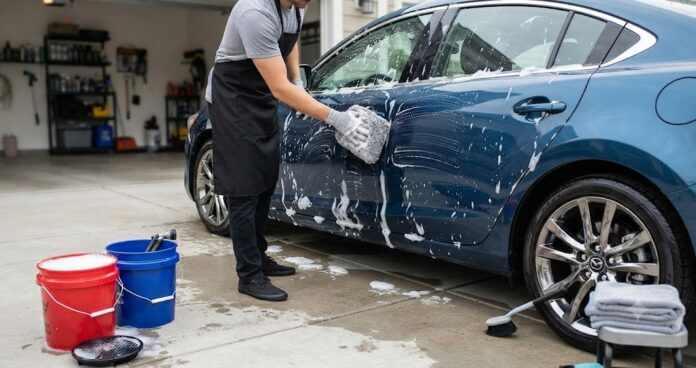
Maintaining your vehicle’s condition at home saves money and protects your investment. By using the right tools, following a systematic interior-to-exterior approach, and focusing on high-touch surfaces, you can achieve a professional-level clean without visiting a commercial car wash.
Key Takeaways for DIY Car Care
- Work from top to bottom: Gravity pulls dirt down; cleaning the roof first prevents re-soiling lower panels.
- Two-bucket method: Use one bucket for soapy water and another for rinsing your mitt to prevent scratching the paint with grit.
- Don’t forget the crevices: Use brushes for air vents and seat tracks.
- Protect the finish: Waxing after washing adds a layer of UV protection and shine.
The Professional Preparation Phase
Before you begin, gather your supplies. Using improper tools is the most common cause of “swirl marks” on car paint.
- Microfiber towels: Use high-GSM (grams per square meter) towels.
- PH-balanced car soap: Avoid dish soap, as it strips wax and dries out rubber seals.
- Dedicated wheel cleaner: Wheels contain iron deposits that require specialized chemistry.
Pro Tip: Never wash your car in direct sunlight. Heat causes soap and water to evaporate before you can wipe them off, leading to stubborn water spots.
Interior Detailing: Beyond the Vacuum
The interior requires more than just a quick vacuum. Focus on the “high-touch” zones where bacteria and oils accumulate.
1. The Dashboard and Console
Use a soft-bristled brush to agitate dust out of air vents. Follow up with a damp microfiber cloth. Avoid high-gloss silicone sprays; they attract more dust and can create a dangerous, blinding glare on your windshield.
2. Upholstery and Carpets
For fabric seats, a mixture of warm water and a small amount of upholstery cleaner works wonders. If you have leather, use a pH-neutral leather cleaner followed by a conditioner to prevent cracking.
| Surface Area | Recommended Tool | Cleaning Frequency |
| Air Vents | Soft Detail Brush | Monthly |
| Glass/Mirrors | Microfiber + Ammonia-free Spray | Bi-weekly |
| Floor Mats | Power Washer/Scrub Brush | Monthly |
| Leather Seats | Soft Cloth + Leather Conditioner | Every 3 Months |
Exterior Washing: The Two-Bucket System
The secret to scratch-free paint is keeping your wash mitt clean.
- The Pre-Rinse: Spray the car thoroughly with water to remove loose debris.
- The Wash: Dip your mitt in the soap bucket, clean a panel, then dip it in the rinse bucket before going back to the soap. This traps grit at the bottom of the rinse bucket rather than dragging it across your clear coat.
- Drying: Use a clean, dry microfiber drying towel. Instead of rubbing, lay the towel flat and pull it across the surface to absorb moisture.
Expert Insight: A common bottleneck is the wheel wells. Most people skip these, but they are the primary source of road grime that splashes onto your clean panels while driving. Use a long-handled wheel brush to reach deep inside.
Advanced Troubleshooting & Finishing
Sometimes, washing isn’t enough to remove bonded contaminants.
- Clay Bar Treatment: If your paint feels rough to the touch after washing, use a clay bar with a lubricant spray. This pulls embedded pollutants out of the paint pores.
- Paint Protection: After the surface is clean, apply a synthetic sealant or carnauba wax. This doesn’t just add shine; it acts as a sacrificial layer against bird droppings, tree sap, and UV rays.
Frequently Asked Questions
1. Can I use dish soap to wash my car?
No. Dish soap is designed to strip grease from pots and pans. It will strip your car’s protective wax layer and can dry out plastic trim, leading to premature fading.
2. How do I get rid of bad odors in my car?
Start by replacing your cabin air filter—a step many people overlook. Then, use an odor-neutralizing spray or an ozone generator treatment if the smell persists in the upholstery.
3. How often should I wax my car?
For optimal protection, wax your vehicle every 3 to 4 months. If you live in an area with harsh winters or extreme sun, increase this to every 2 months.
4. What is the best way to clean interior glass?
Use two microfiber towels: one for the initial wipe with an ammonia-free glass cleaner and a second, dry towel to buff away streaks. Always wipe in a consistent direction (e.g., vertical for the inside, horizontal for the outside) to identify which side any remaining streaks are on.
5. Why do I see swirl marks on my paint?
Swirl marks are usually caused by improper washing techniques, such as using an old sponge, washing in direct sun, or using a dirty drying towel. Always ensure your wash media is clean and well-lubricated.
A clean car isn’t just about aesthetics; it’s about preserving the long-term value and safety of your vehicle. You don’t need an expensive professional detailer to get showroom results—just the right process and a little bit of patience.