
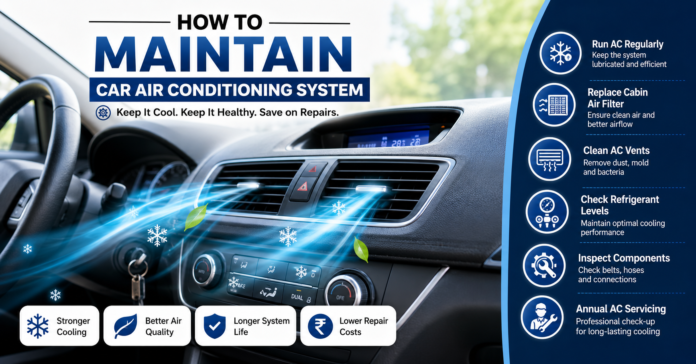
Your car’s air conditioning system does more than keep you comfortable during hot weather. Regular maintenance helps improve cooling performance, fuel efficiency, air quality, and the lifespan of important AC components. By following a few simple maintenance practices, you can avoid costly repairs and enjoy consistent cooling throughout the year.
Key Takeaways
- Run your car AC regularly, even during winter.
- Replace the cabin air filter as recommended.
- Keep AC vents clean and free from dust.
- Check refrigerant levels when cooling performance drops.
- Inspect belts, hoses, and AC components regularly.
- Get professional AC servicing at least once a year.
- Address unusual noises, odors, or weak airflow immediately.
Why Car AC Maintenance Matters
Many drivers only think about their air conditioning system when it stops working. However, preventive maintenance helps prevent expensive repairs and keeps the system operating efficiently.
Benefits of maintaining your car AC system include:
- Better cooling performance
- Improved cabin air quality
- Lower repair costs
- Increased component lifespan
- Better fuel efficiency
- Reduced strain on the engine
A well-maintained AC system can last for many years without major issues.
Understanding How a Car AC System Works
Before learning how to maintain a car air conditioning system, it’s helpful to understand its basic components.
| Component | Function |
|---|---|
| Compressor | Compresses and circulates refrigerant |
| Condenser | Releases heat from refrigerant |
| Evaporator | Produces cool air inside the cabin |
| Refrigerant | Transfers heat and creates cooling |
| Cabin Air Filter | Filters dust and pollutants |
| Blower Motor | Pushes cooled air through vents |
When all these components work together properly, your vehicle delivers cool and comfortable air.
Run Your AC Regularly
One of the simplest maintenance practices is using your air conditioner regularly.
Many drivers stop using AC during colder months. However, running it for 10–15 minutes once a week helps:
- Lubricate compressor seals
- Prevent refrigerant leaks
- Keep internal components functioning properly
- Reduce moisture buildup
Pro Tip: Turn on the AC while driving in winter occasionally to keep the system healthy year-round.
Replace the Cabin Air Filter
The cabin air filter plays a crucial role in maintaining airflow and air quality.
A clogged filter can cause:
- Weak airflow
- Unpleasant odors
- Reduced cooling efficiency
- Increased strain on the blower motor
When Should You Replace It?
Most manufacturers recommend replacing the cabin air filter every:
- 12,000–15,000 miles (19,000–24,000 km), or
- Once a year
If you frequently drive in dusty environments, replace it more often.
Keep AC Vents and Interior Clean
Dust and debris can accumulate inside air vents over time.
Regular cleaning helps:
- Improve airflow
- Reduce allergens
- Prevent mold growth
- Eliminate unpleasant smells
Use a soft brush or vacuum attachment to clean vents and dashboard areas.
Signs of Dirty Vents
- Musty smell when AC starts
- Dust blowing from vents
- Reduced airflow
Cleaning these areas regularly helps maintain a healthier cabin environment.
Monitor Refrigerant Levels
Refrigerant is essential for cooling performance.
If your AC isn’t cooling properly, low refrigerant levels may be the cause.
Common Signs of Low Refrigerant
| Symptom | Possible Cause |
|---|---|
| Warm air from vents | Low refrigerant |
| AC cycles frequently | Refrigerant leak |
| Reduced cooling | Insufficient refrigerant |
| Hissing sounds | System leak |
Because refrigerant handling requires specialized equipment, professional servicing is usually recommended.
Expert Insight: If refrigerant levels are low, simply refilling the system without fixing the leak often results in recurring problems.
Inspect the Condenser Regularly
The condenser is typically located behind the front grille and is exposed to dirt, leaves, bugs, and road debris.
A dirty condenser can:
- Reduce cooling efficiency
- Cause overheating
- Increase compressor workload
Cleaning Tips
- Use low-pressure water to remove debris.
- Avoid bending condenser fins.
- Check for visible damage during routine inspections.
A clean condenser improves heat transfer and cooling performance.
Pay Attention to Strange Noises
Your AC system should operate quietly.
If you hear unusual sounds, it could indicate:
- Worn compressor bearings
- Loose belts
- Refrigerant issues
- Damaged blower motor
Common warning sounds include:
- Squealing
- Clicking
- Grinding
- Rattling
Addressing these issues early can prevent expensive repairs.
Prevent Mold and Bad Odors
Moisture buildup inside the evaporator can encourage mold and bacteria growth.
How to Prevent It
- Turn off AC a few minutes before reaching your destination.
- Let the fan run briefly afterward.
- Replace dirty cabin filters promptly.
- Use AC system cleaners when necessary.
This simple habit helps dry excess moisture and keeps your cabin smelling fresh.
Schedule Professional AC Service
Even if your air conditioner appears to work normally, annual inspections are beneficial.
Professional technicians can:
- Check refrigerant pressure
- Detect leaks
- Test compressor performance
- Inspect hoses and seals
- Clean critical components
Regular servicing often identifies small problems before they become costly failures.
Common Car AC Maintenance Schedule
| Maintenance Task | Recommended Frequency |
|---|---|
| Run AC system | Weekly |
| Clean air vents | Monthly |
| Check condenser | Every 3–6 months |
| Replace cabin filter | Annually |
| Professional AC inspection | Once a year |
Frequently Asked Questions
1. How often should I service my car air conditioning system?
Most experts recommend a professional AC inspection and service at least once every year.
2. Why is my car AC blowing warm air?
Common causes include low refrigerant, compressor issues, clogged filters, or condenser problems.
3. Can I recharge my car AC myself?
While DIY recharge kits exist, professional servicing is safer and more accurate for diagnosing leaks and system issues.
4. Does using the AC affect fuel consumption?
Yes, AC usage slightly increases fuel consumption, but a properly maintained system minimizes the impact.
5. What causes bad smells from car AC vents?
Mold, bacteria, dirty cabin air filters, and moisture buildup are the most common causes.
Keep Your Car AC Running Like New
Maintaining your car air conditioning system doesn’t require extensive mechanical knowledge. Simple habits such as running the AC regularly, replacing cabin filters, cleaning vents, checking the condenser, and scheduling annual inspections can dramatically improve performance and extend the life of the system. Start implementing these maintenance tips today to enjoy reliable cooling, cleaner air, and lower repair costs for years to come.